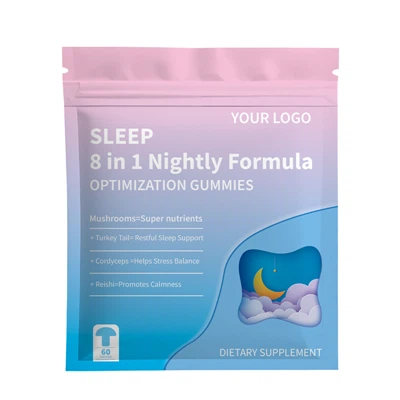
Do Sleep Support Gummies help with sleep maintenance?
As a supplier of Sleep Support Gummies, I've witnessed firsthand the growing interest in these products. In today's fast - paced world, sleep problems have become increasingly common, and people are constantly on the lookout for effective solutions. Sleep Support Gummies seem to be a convenient and appealing option, but the question remains: do they really help with sleep maintenance?
The Science Behind Sleep and Gummies
To understand how Sleep Support Gummies might assist with sleep maintenance, we first need to understand the process of sleep itself. Sleep is a complex physiological state regulated by a variety of factors, including neurotransmitters, hormones, and our internal body clock.
One of the key ingredients often found in Sleep Support Gummies is melatonin. Melatonin is a hormone produced by the pineal gland in the brain. Its production is influenced by light exposure, with levels rising in the evening as it gets dark, signaling to the body that it's time to sleep. Supplementing with melatonin can help regulate the sleep - wake cycle, especially for those who have disrupted circadian rhythms, such as shift workers or people with jet lag.
Another common ingredient is L - theanine, an amino acid found in tea leaves. L - theanine has been shown to promote relaxation and reduce anxiety without causing drowsiness. By reducing stress and anxiety levels, it can help the body and mind unwind, making it easier to fall asleep and stay asleep.


Magnesium is also frequently included in Sleep Support Gummies. Magnesium plays a crucial role in many bodily functions, including muscle relaxation and nerve function. Low magnesium levels have been associated with poor sleep quality, and supplementing with magnesium can improve sleep by helping to calm the nervous system and relax muscles.
Evidence from Research
Numerous studies have investigated the effectiveness of the ingredients commonly found in Sleep Support Gummies. For example, a meta - analysis of melatonin studies found that melatonin supplementation significantly reduced the time it took to fall asleep and increased total sleep time. The effect was particularly pronounced in people with sleep disorders or those with disrupted circadian rhythms.
Research on L - theanine has also shown promising results. A study published in the Journal of Physiological Anthropology found that participants who took L - theanine experienced reduced stress and improved sleep quality. The participants reported feeling more relaxed and having fewer sleep disturbances.
Regarding magnesium, a randomized controlled trial showed that magnesium supplementation improved sleep efficiency, sleep time, and sleep onset latency in older adults with insomnia.
However, it's important to note that most of these studies have focused on individual ingredients rather than Sleep Support Gummies as a whole. While the evidence for the individual ingredients is strong, more research is needed to determine the overall effectiveness of Sleep Support Gummies in real - world settings.
User Experiences
In addition to scientific research, user experiences can provide valuable insights into the effectiveness of Sleep Support Gummies. Many customers who have tried our Sleep Support Gummies have reported positive results. They claim that the gummies have helped them fall asleep faster, stay asleep throughout the night, and wake up feeling more refreshed.
One customer, John, shared his experience: "I've struggled with insomnia for years. I've tried various sleep aids, but most of them made me feel groggy in the morning. Since I started taking your Sleep Support Gummies, I've noticed a significant improvement in my sleep. I fall asleep within minutes and wake up feeling rested."
Another customer, Sarah, said: "I travel a lot for work, and jet lag used to be a nightmare. But now, I take a Sleep Support Gummy before I go to bed at my destination, and it really helps me adjust to the new time zone and get a good night's sleep."
Other Factors Affecting Sleep Maintenance
While Sleep Support Gummies can be a helpful tool, it's important to remember that they are not a magic solution. There are many other factors that can affect sleep maintenance, including lifestyle habits, diet, and stress levels.
For example, regular exercise can improve sleep quality, but it's best to avoid exercising too close to bedtime as it can stimulate the body and make it harder to fall asleep. A balanced diet rich in fruits, vegetables, and whole grains can also support good sleep, while consuming caffeine, alcohol, or large meals close to bedtime can disrupt sleep.
Managing stress is also crucial for sleep maintenance. Techniques such as meditation, deep breathing exercises, and yoga can help reduce stress and anxiety levels, making it easier to fall asleep and stay asleep.
Our Product Range
In addition to our Sleep Support Gummies, we also offer a variety of other gummy products that may be of interest to our customers. For example, our Sea Moss With Elderberry Gummies are a great source of vitamins and minerals and can help support the immune system. Our Vitamin Little Bear Gummies are a fun and delicious way to ensure that you and your family are getting the essential vitamins and nutrients you need. And for those who are into fitness, our Creatine Monohydrate Gummies can help enhance muscle strength and performance.
Contact Us for Purchase and Collaboration
If you're interested in learning more about our Sleep Support Gummies or any of our other products, we'd love to hear from you. Whether you're a retailer looking to stock our products or an individual interested in purchasing them for personal use, we're here to assist you. Feel free to reach out to us to discuss your needs and explore potential business opportunities.
References
- Arendt J, Skene DJ. Melatonin as a chronobiotic. Sleep Med Rev. 2005;9(1):25 - 39.
- Juneja LR, Chu D, Okubo T, Nagato Y, Yokogoshi H. L - Theanine - a unique amino acid of green tea and its relaxation effect in humans. Trends Food Sci Technol. 1999;10(8):199 - 204.
- Romanos J, et al. Magnesium supplementation improves subjective measures of insomnia in elderly primary insomniacs: a double - blind placebo - controlled pilot study. J Am Coll Nutr. 2012;31(1):32 - 39.