Can hard capsules be filled with liquid? This is a question that often comes up in the pharmaceutical, nutraceutical, and supplement industries. As a hard capsule supplier, I've encountered this query numerous times from clients looking to develop innovative products. In this blog, I'll delve into the technical aspects, advantages, challenges, and considerations when it comes to filling hard capsules with liquid.
Technical Feasibility
Hard capsules are typically made of gelatin or vegetarian alternatives like hypromellose (HPMC). These materials are designed to enclose solid powders, granules, or pellets. However, with advancements in capsule - filling technology, it is indeed possible to fill them with liquids.
The key to filling hard capsules with liquid lies in the formulation of the liquid and the precision of the filling equipment. The liquid must have appropriate viscosity. If the liquid is too thin, it may leak out of the capsule, while a liquid that is too thick can cause problems during the filling process. Specialized filling machines are used to ensure accurate dosing of the liquid into the capsules. These machines are equipped with nozzles and pumps that can handle different types of liquids, from aqueous solutions to oily substances.
Advantages of Filling Hard Capsules with Liquid
- Enhanced Bioavailability: Liquids are generally absorbed faster in the body compared to solid dosage forms. When a liquid is encapsulated in a hard capsule, it can be released quickly once the capsule dissolves in the gastrointestinal tract. This can lead to faster onset of action and better overall bioavailability of the active ingredients. For example, in the case of fat - soluble vitamins like vitamin D or E, encapsulating them in an oily liquid can improve their absorption in the body.
- Masking of Taste and Odor: Some active ingredients have unpleasant tastes or odors. By encapsulating them in a liquid within a hard capsule, the taste and odor can be effectively masked. This is particularly beneficial for products like Women's Probiotic Capsules, where probiotic strains may have a distinct smell or taste that can be off - putting to consumers.
- Formulation Flexibility: Liquid formulations offer more flexibility in terms of combining different active ingredients. It is easier to create homogeneous mixtures of multiple substances in a liquid state compared to solid blends. This allows for the development of complex formulations, such as Women's Prebiotic Digestive Enzyme Capsules, which may contain a combination of prebiotics and digestive enzymes.
Challenges and Considerations
- Compatibility with Capsule Material: The liquid formulation must be compatible with the capsule material. For example, some solvents or chemicals in the liquid may react with the gelatin or HPMC of the capsule, causing it to degrade or change its properties. This can lead to issues such as capsule leakage or premature dissolution.
- Stability: Liquid - filled hard capsules may be more prone to stability issues compared to solid - filled ones. Factors such as temperature, humidity, and light can affect the stability of the liquid formulation and the integrity of the capsule. For instance, if the liquid contains volatile components, they may evaporate over time, leading to a change in the concentration of the active ingredients.
- Cost: The process of filling hard capsules with liquid is generally more complex and requires specialized equipment. This can result in higher production costs compared to traditional solid - filling methods. Additionally, the need for more stringent quality control measures to ensure the stability and integrity of the liquid - filled capsules can also add to the overall cost.
Examples of Liquid - Filled Hard Capsules in the Market
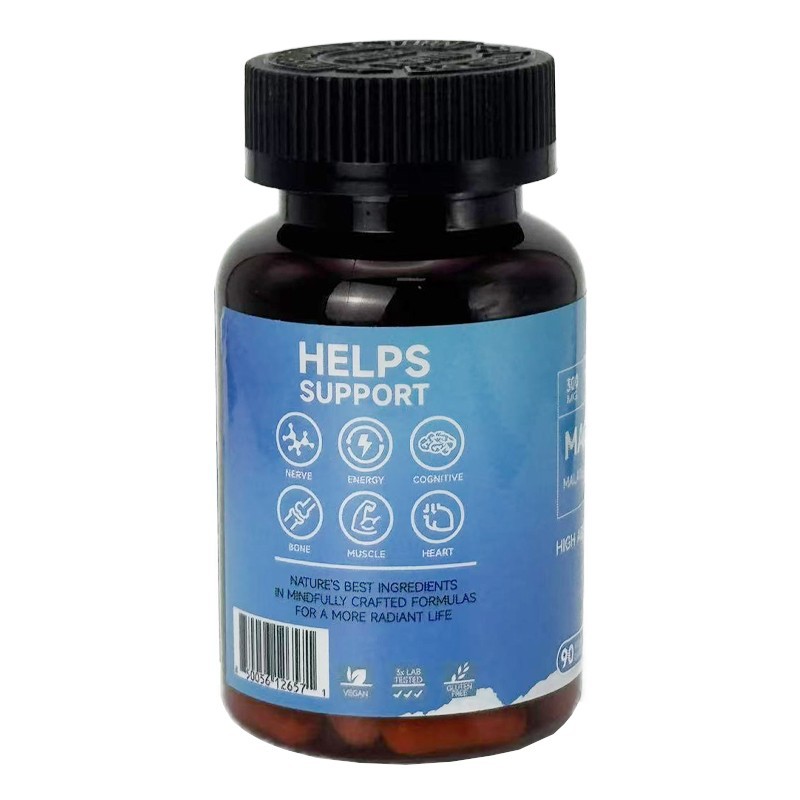
There are several successful liquid - filled hard capsule products available in the market. Sleep Regulation Magnesium Capsules are a great example. Magnesium is an important mineral for sleep regulation, and encapsulating it in a liquid form can improve its absorption and effectiveness. The liquid formulation can also be designed to include other sleep - promoting ingredients, such as melatonin or valerian root extract, in a single capsule.
Quality Control and Testing
To ensure the quality and safety of liquid - filled hard capsules, rigorous quality control and testing are essential. This includes testing the physical and chemical properties of the liquid formulation, such as viscosity, pH, and concentration of active ingredients. The integrity of the capsule, including its seal and dissolution time, also needs to be tested. Microbiological testing is also crucial, especially for products like probiotic capsules, to ensure that the product is free from harmful microorganisms.
Regulatory Considerations
When developing liquid - filled hard capsule products, it is important to comply with relevant regulatory requirements. Different countries and regions have specific regulations regarding the formulation, manufacturing, labeling, and marketing of pharmaceutical and nutraceutical products. For example, in the United States, the Food and Drug Administration (FDA) has strict guidelines for the quality and safety of dietary supplements, including liquid - filled capsules.
Conclusion
In conclusion, hard capsules can indeed be filled with liquid, and this approach offers several advantages in terms of bioavailability, taste masking, and formulation flexibility. However, it also comes with its own set of challenges, such as compatibility issues, stability concerns, and higher costs. As a hard capsule supplier, we have the expertise and technology to help our clients overcome these challenges and develop high - quality liquid - filled hard capsule products.
If you are interested in exploring the possibility of filling hard capsules with liquid for your product line, we would be more than happy to discuss your specific needs. Our team of experts can provide you with detailed information on the formulation, manufacturing process, and regulatory requirements. Contact us to start a procurement discussion and take your product to the next level.

References
- Pharmaceutical Dosage Forms: Tablets, Volume 1, Third Edition, edited by H. A. Lieberman, L. Lachman, and J. B. Schwartz.
- Remington: The Science and Practice of Pharmacy, 22nd Edition, edited by Philip B. Ansel, Howard C. Allen, and Nicholas G. Popovich.
- Handbook of Encapsulation and Controlled Release, edited by David J. Burgess.