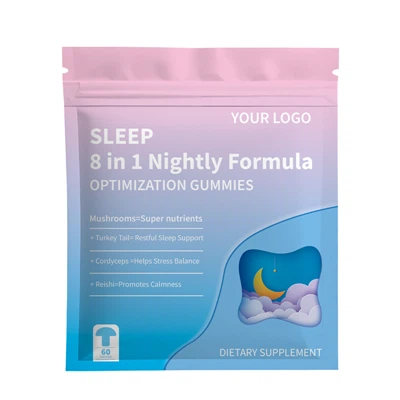
Can children take Sleep Support Gummies?
In the modern world, sleep problems are not limited to adults. An increasing number of children are experiencing difficulties falling asleep or staying asleep, which has raised concerns among parents. Sleep Support Gummies have emerged as a potential solution for those seeking a natural way to improve sleep quality. As a Sleep Support Gummies supplier, I'm often asked whether children can safely consume these gummies. In this blog, I'll delve into the relevant aspects to provide you with a comprehensive answer.
The Importance of Sleep for Children
Before discussing whether children can take Sleep Support Gummies, it's crucial to understand why sleep is so vital for them. Sleep plays a fundamental role in a child's physical and mental development. During sleep, the body repairs and regenerates tissues, the immune system strengthens, and hormones are regulated. For children, sufficient sleep is essential for proper growth, including the release of growth - hormone.
Mentally, sleep helps with memory consolidation, learning, and emotional regulation. Children who don't get enough sleep are more likely to experience mood swings, have difficulty concentrating in school, and may even develop behavioral problems. Ensuring that children have a good night's sleep is, therefore, a top priority for parents.
Ingredients in Sleep Support Gummies
The composition of Sleep Support Gummies varies from product to product, but common ingredients include melatonin, chamomile, valerian root, and L - theanine.
Melatonin is a hormone produced by the pineal gland in the brain that regulates the sleep - wake cycle. It is often used in sleep supplements because it can help signal to the body that it's time to sleep. Chamomile is a well - known herb that has calming properties and has been used for centuries to promote relaxation. Valerian root is another natural sedative that may help improve sleep quality. L - theanine, an amino acid found in tea leaves, can reduce stress and anxiety, making it easier to fall asleep.
Can Children Take Sleep Support Gummies?
The answer to whether children can take Sleep Support Gummies is not a simple yes or no. It depends on several factors, including the child's age, the specific ingredients in the gummies, and the child's overall health.
Age Consideration
- Younger Children (Under 3 Years Old): In general, it is not recommended to give Sleep Support Gummies to children under 3 years old. Their bodies are still developing, and the safety and efficacy of these gummies have not been well - studied in this age group. Moreover, young children may have a higher risk of choking on gummies.
- Older Children (3 - 12 Years Old): For children in this age range, the use of Sleep Support Gummies should be carefully considered. If a child has persistent sleep problems, it is advisable to consult a pediatrician first. The doctor can assess the child's individual needs and determine whether the use of these gummies is appropriate.
- Adolescents (13 - 18 Years Old): Adolescents may be more likely to experience sleep problems due to changes in their hormones and lifestyle. Some pediatricians may recommend low - dose melatonin supplements or other natural sleep aids like Sleep Support Gummies in certain cases. However, it is still important to seek medical advice before starting any new supplement.
Ingredient Safety
Parents should always check the ingredients of Sleep Support Gummies to ensure they are safe for their children. Some ingredients may cause allergic reactions or interact with other medications the child is taking. For example, valerian root may have sedative effects and could potentially interact with other drugs that also cause drowsiness.


Alternatives to Sleep Support Gummies for Children
If Sleep Support Gummies are not suitable for a child, there are other ways to promote good sleep.
Establish a Bedtime Routine
A consistent bedtime routine can help signal to the child's body that it's time to wind down. This could include activities such as reading a book, taking a warm bath, or listening to soft music.
Create a Sleep - Friendly Environment
The bedroom should be dark, quiet, and at a comfortable temperature. Removing electronic devices from the bedroom can also help reduce distractions and improve sleep quality.
Encourage Physical Activity
Regular physical activity during the day can help children sleep better at night. However, it is best to avoid vigorous exercise too close to bedtime.
Our Sleep Support Gummies
As a Sleep Support Gummies supplier, we take pride in offering high - quality products. Our gummies are made with natural ingredients and are carefully formulated to provide a safe and effective way to support sleep. We source our ingredients from reliable suppliers and follow strict quality control measures during the manufacturing process.
In addition to Sleep Support Gummies, we also offer a range of other gummy products, such as Mushroom Vitality Gummies, Creatine Monohydrate Gummies, and Male Performance Gummies. Each of these products is designed to meet specific health needs.
Contact Us for Procurement
If you are interested in purchasing our Sleep Support Gummies or any of our other gummy products, we invite you to reach out to us for a procurement discussion. Our team is dedicated to providing excellent customer service and will work with you to meet your requirements. Whether you are a retailer looking to add our products to your inventory or an individual interested in bulk purchasing, we are here to assist you.
References
American Academy of Sleep Medicine. (2016). Consensus statement on the recommended amount of sleep for healthy children: methodology and discussion. Sleep, 39(1), 123 - 131.
National Sleep Foundation. (2015). Sleep in children and adolescents. Retrieved from https://sleepfoundation.org/sleep - topics/sleep - children - and - adolescents.
Wahlstrom, J., & Drake, C. L. (2016). Melatonin for the treatment of insomnia in children and adolescents. Paediatric Drugs, 18(3), 187 - 194.